
Mounting & Installation
"strong and plumb is the rule of thumb"

We are happy to liaise directly with
your architect, builder, or contractor to discuss the installation
of your weathervane.
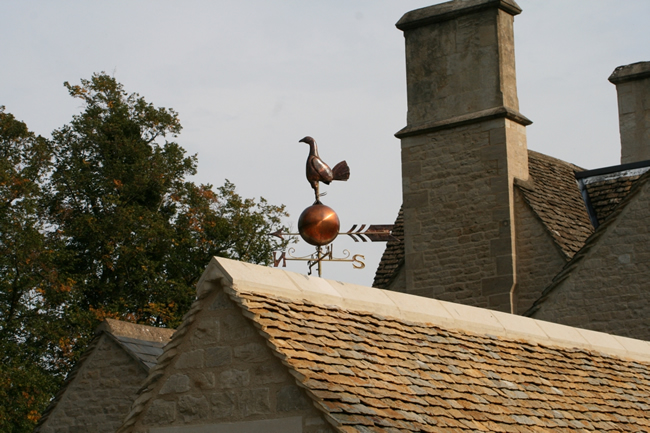
Our standard bracket, which we strongly recommend, requires access within the structure of the roof. This type of installation, referred as a "internal roof mount", is the industry-wide recommended fitting for three-dimensional vanes. The singular vertical stainless steel, attached to a cross-member within the roof, and extending up uninterrupted to the pivot, is the key to ensuring continual rigid and plumb position and enhanced safety & functionality. Both the necessary stainless steel for mounting and the internal roof bracket come as standard with all Greens Weathervanes.
Where access inside the roof is not possible, and an end-gable mount is the only option, a custom exterior stainless steel bracketing system may be an alternative. Good communication lines with your builder are essential to establish overhangs, feasibility and if adequate support at the peak is available. Supplied at cost from a stainless steel welding expert, function and aesthetic are of equal consideration.
As, the mantra goes, a weathervane is only a good as it's steel.
View
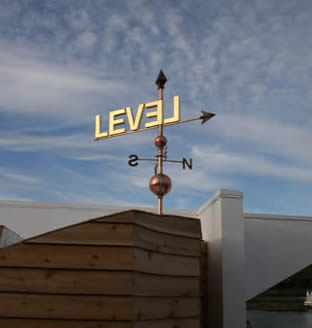
our standard internal roof bracket
Is your build in progress?
Wanting
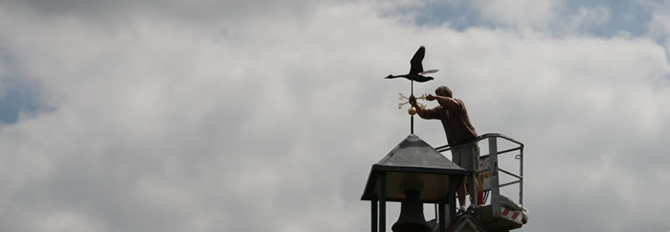
a bespoke design for a build "in-progress", or where the
roof is currently open & imminently closing, often means mounting
hardware needs shipping to site in advance. Whilst calculating
stainless steel to the finished weathervane is the normal and the
correct order of operation, we understand time-sensitive projects.
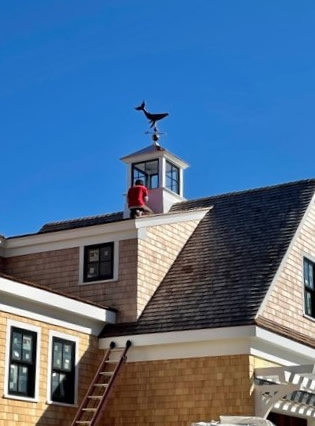
NOTE: Stainless steel requirements are based on two measurements: the amount needed inside the roof to reach an existing or created cross-member (calculated by your builder), and the amount needed outside the roof (determined by the weathervane). These two should ideally be roughly the same.
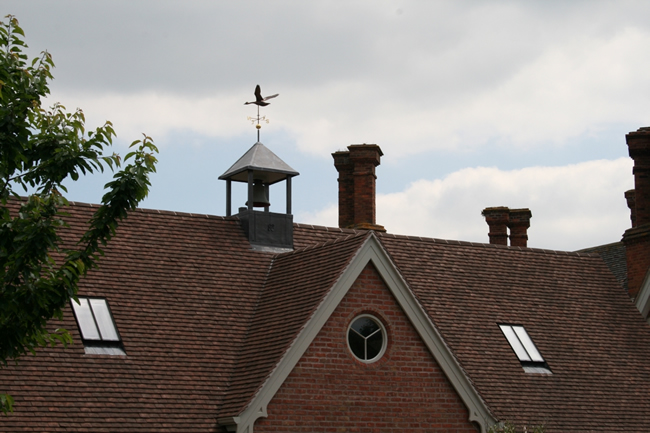
Where an extended height is preferrable outside the roof, adequate structural support for the stainless steel rod should be planned & built.
|
If
you have any questions or concerns about installing, mounting,
or locating one |
||
|
|
Some buildings are designed with an architectural feature, which almost looks bare without a weathervane. Other locations have a newer secondary building which begs for a personal flourish, and feels right for a specific theme, (e.g. a horse for a stables). However their are no rules thematically; the best designs are those that have a touch of surprise, and are equally effective positioned on a roof without a cupola or clocktower. With a primary residential building, it is important to locate weathervanes away from chimneys, in order to give visual "breathing space". |
|
|
|
||
 |
Determining the size and location of a weathervane often depends on the roof or the structure. Buildings often want a distinct shape (long vs. tall) one that speaks to the pitch and creates the sense of a "diamond in the sky". While bespoke proportionality can enhance a pitch or create a pleasing pause on a long line, size preference is in fact entirely personal. Tastes often vary by achitectural style (modern/traditional), but by in large, three-dimensional vanes function best as readable eye-catching singular themes, and visual impact is the name of the game. | |
 |
As a hallmark architectural feature, designs are always best placed somewhere they will be most enjoyed and can be seen. Visual impact from a sweeping drive or from a private window adds narrative nuance to the home. As a landscape feature in a garden, or in curated spaces, the studio can evolve themes into artworks either free-standing, wall-mounted, or cast in bronze. In the case of multiple peaks it is not unusual for a client to have two repeated designs, or two differing themes, creating a playful visual rhythm on the skyline. | |
|
|
As a traditional architectural material, copper often melds beautifully on a house that celebrates master craftsmanship, proportion and texture. Because a three-dimensional vane is more than a final finishing touch, often how they "marry to the roof" should be part of the larger project vision. The studio intentionally designs "snug to the roof". Clients wishing to raise their design to more pinnacle heights may call to discuss previous or similar projects and how this can be enabled. | |
|
|
The final stage? Gold leaf is a wonderful and traditional surface treatment. With it's sudden unexpected glint from a distanct view, a gilded vane acts as a beacon calling from afar. Visible in the moonlight, highlighting detail, and ever-changing to reflect the moods of the weather, full-gilding is the historic and correct treatment for a three-dimensional copper weathervane. Accentuating prominence of position it can be a radical statement on a modern build, and a subtly enhancing material note on a traditional structure. Particularly effective on flat areas of a design, but most effective applied across the vane, explore our gilding page to learn more... |
|


GREENS Weathervanesbeautifully bespoke copper weathervanes England since 1995


home | about | weathervanes
| sculpture | new!
| available now | contact
purchasing | installation
| gold leaf | exhibitions
| the artists |
history
| visit